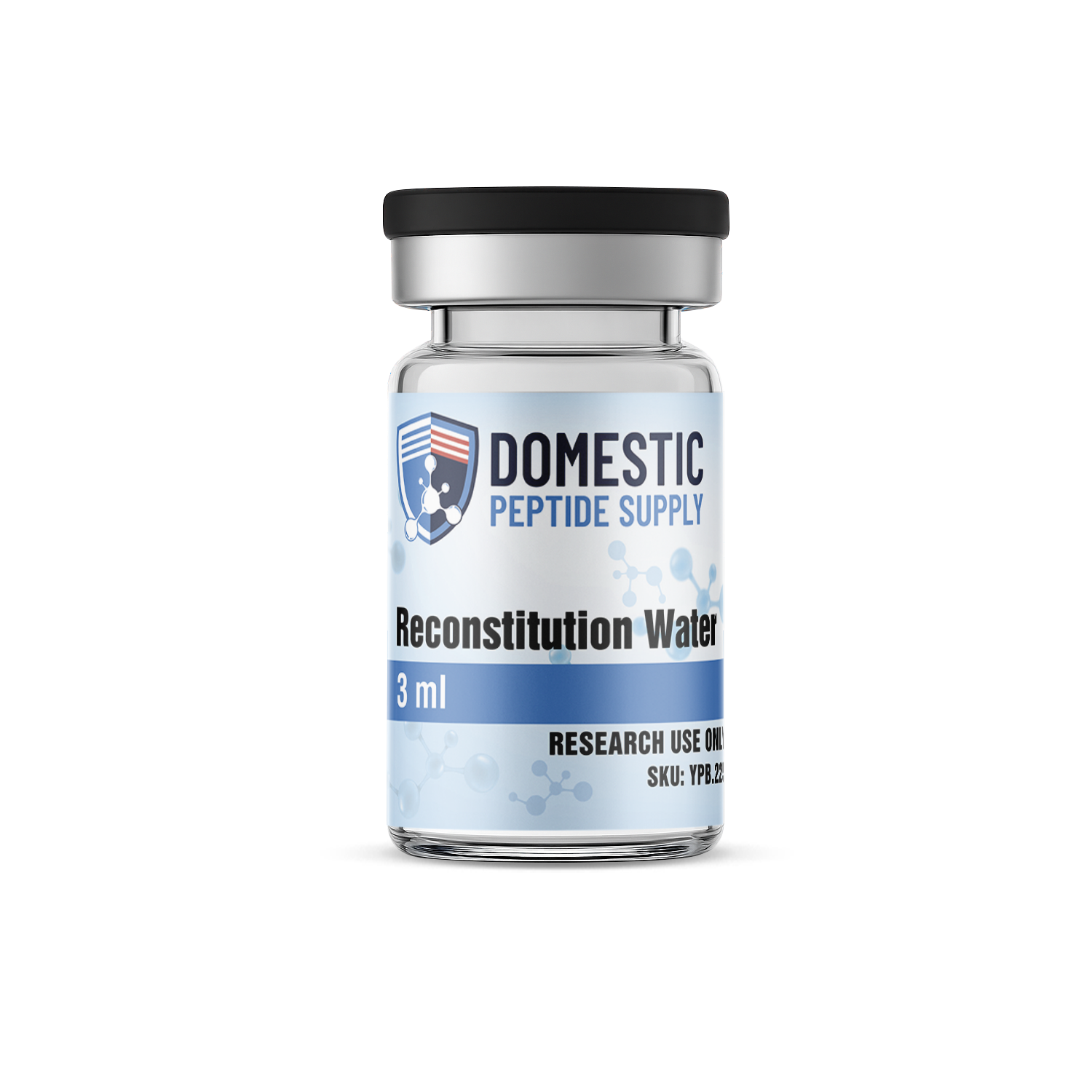
Reconstitution Water
Price range: $5.00 through $10.00
Additional information
| Weight | 0.2 lbs |
|---|---|
| Dosage | 3ml, 10ml |
Research Use Only
These studies reference research-grade peptides for laboratory and scientific investigation only. Not for human consumption. Not intended to diagnose, treat, cure, or prevent any disease.
Published Scientific Research
Peer-reviewed laboratory research investigating research peptides from leading scientific databases
An antimicrobial daptide from human skin commensal Staphylococcus hominis protects against skin pathogens.
The molecular mechanisms by which these natural products mediate interbacterial competition are not fully understood. Membrane permeability and voltage-clamp lipid bilayer experiments support a mechanism by which the daptide rapidly dissipates the transmembrane potential by forming peptidic channels.
View Full StudyOptimizing lipopeptide bioactivity: The impact of non-ionic surfactant dressing.
The solubility and homogeneity of the lipopeptides were significantly increased, and dynamic light scattering (DLS) measurements showed the formation of small particles of around 20 nm, which were well reproducible and storable. The pL1 lipopeptide, formulated with the selected poloxamers, exhibited enhanced antibacterial activity with significantly reduced haemolytic side effects.
View Full StudyIn vitro reconstitution of kallikrein-kinin system and progress curve analysis.
Human kallikrein-kinin system (KKS) is a proteolytic cascade with two serine-protease zymogen couples (Factor XII and prekallikrein (PK) and their activated forms, FXIIa, PKa, respectively), releasing bradykinin by cleavage of native high-molecular-weight kininogen (nHK) into cleaved HK. For KKS investigation in human plasma, this cascade is usually triggered on ice eventually by mixing with purified proteins. It has been established that purified FXIIa, PK, and nHK required a fixed order and ti
View Full StudyLong-term potentiation reconstituted with an artificial TARP/PSD-95 complex.
The critical role of AMPA receptor (AMPAR) trafficking in long-term potentiation (LTP) of excitatory synaptic transmission is now well established, but the underlying molecular mechanism is still uncertain. To determine if such interaction is a core minimal component of the AMPAR trafficking and LTP mechanism, we engineered artificial binding partners, which individually were biochemically and functionally dead but which, when expressed together, rescue binding and both basal synaptic transmission and LTP.
View Full StudyReconstitution of Molybdoenzymes with Bis-Molybdopterin Guanine Dinucleotide Cofactors.
Molybdoenzymes are ubiquitous and play important roles in all kingdoms of life. The cofactors of these enzymes comprise the metal, molybdenum (Mo), which is bound to a special organic ligand system called molybdopterin (MPT). Additional small ligands are present at the Mo atom, including water, hydroxide, oxo-, sulfido-, or selenido-functionalities, and in some enzymes, amino acid ligand, such as serine, aspartate, cysteine, or selenocysteine that coordinate the cofactor to the peptide chain of
View Full StudyRationally designed hyaluronic acid-based nano-complexes for pentamidine delivery.
In vitro studies on human lung (A549) and breast (MDA-MB-231) cancer cell lines showed that pentamidine-loaded nanoparticles were more cytotoxic in comparison to the free drug, suggesting an enhanced internalization of encapsulated drug by cancer cells.
View Full StudyRelated products
-
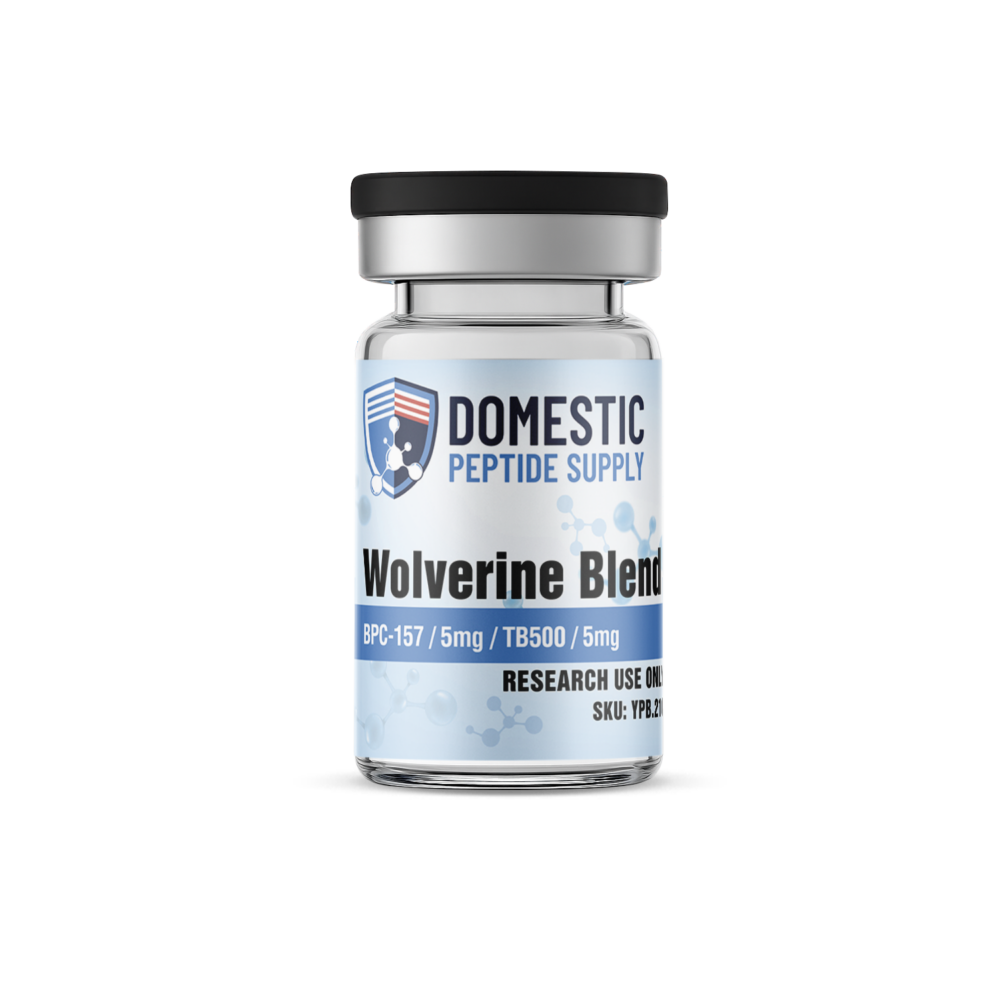
Wolverine Blend – BPC-157 (5mg) / TB500 (5mg) (Globally Sourced)
Price range: $95.00 through $175.00Select options This product has multiple variants. The options may be chosen on the product page -