 Sermorelin (10mg)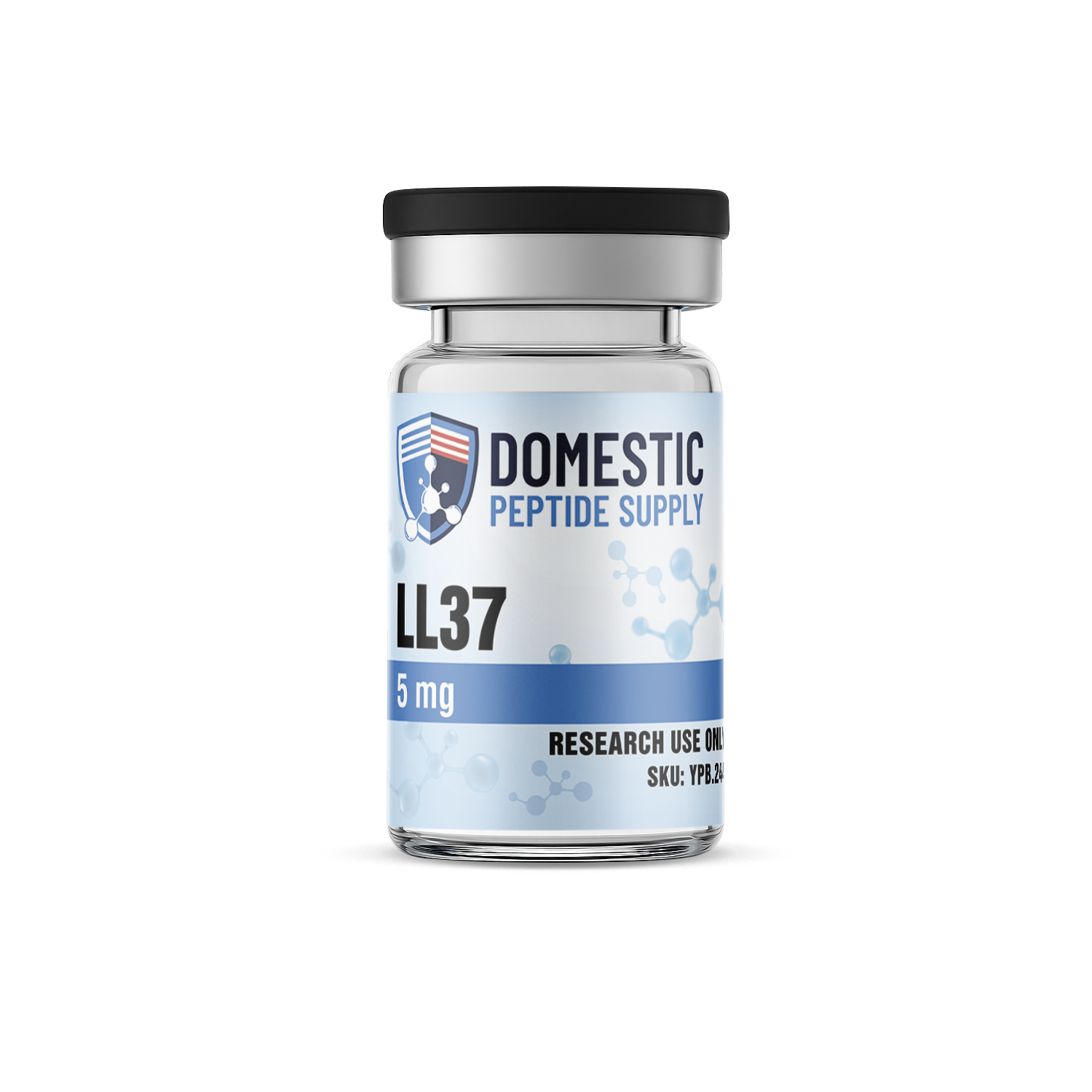
LL37 (5mg)
$115.00
Description
A single-component research material supplied for controlled research environments. LL-37 is a synthetic cathelicidin-derived peptide used in research exploring innate immunity, antimicrobial pathways, and wound-healing models in controlled systems.
Composition
• LL-37
• Appearance: Lyophilized powder in a sealed research vial
Research Focus (non-clinical)
• Characterization of LL-37 in antimicrobial activity assays
• Studies on immune modulation and inflammatory pathway signaling
• Evaluation in cell culture and tissue models related to epithelial repair
• Stability and solubility profiling under laboratory storage conditions
For qualified research professionals and institutional laboratories. Not for human use.
Documentation & Quality Assurance
Each lot is sourced through our verified global supply chain with emphasis on traceability and quality control. We work diligently to obtain and maintain third-party analytical reports (HPLC/LC-MS) and Certificates of Analysis for each batch, as part of our ongoing quality process. These documents are reviewed internally and displayed as they become available. Independent third-party testing is also performed on select lots to confirm identity, purity, and alignment with our internal specifications.
Important Notice
This product is intended for laboratory research use only. It is not intended for human or veterinary use, and must not be used for diagnostic, therapeutic, or clinical purposes.
This material is not a drug, medical device, or dietary supplement, and has not been evaluated by the U.S. Food and Drug Administration.
Quality & Manufacturing
All materials are sourced from carefully vetted domestic and international manufacturing partners who follow quality systems consistent with ISO and cGMP principles. Each supplier is reviewed for reliability, documentation integrity, and transparency in testing.
We require a verified purity of 99% or higher and perform independent third-party spot testing to confirm that select lots meet our internal standards for identity, purity, and composition. Where available, endotoxin testing results are included on Certificates of Analysis to verify laboratory purity; their inclusion is for research quality assessment only and does not imply suitability for human or veterinary use.
All research materials are sealed for integrity and packaged for stability during storage and transport from manufacturing through final delivery.
Additional information
| Weight | 0.2 lbs |
|---|
Storage Instructions
Certificate of Analysis
Every batch undergoes rigorous third-party laboratory testing to verify identity, purity (≥98%), and quality before release.
View Certificate of AnalysisResearch Use Only
These studies reference research-grade peptides for laboratory and scientific investigation only. Not for human consumption. Not intended to diagnose, treat, cure, or prevent any disease.
Published Scientific Research
Peer-reviewed laboratory research investigating research peptides from leading scientific databases
A sonosensitive diphenylalanine-based broad-spectrum antimicrobial peptide.
The antimicrobial effect of antimicrobial peptides is typically slow; they can be rapidly biodegraded and often have non-selective toxicity and elaborate sequences. Here we report a short peptide that is activated by ultrasound, that shows high broad-spectrum antibacterial efficiency (>99%) against clinically isolated methicillin-resistant bacteria (specifically, Staphylococcus aureus, Escherichia coli, Staphylococcus epidermidis, Enterobacter cancerogenus and Pseudomonas aeruginosa) with 15 m
View Full StudyAntimicrobial peptide CRAMP/LL-37 mediates ferroptosis resistance in cardiomyocytes by inhibiting cathepsin L.
However, its specific role and mechanism in ferroptosis are unclear. Finally, the regulatory mechanism of CRAMP in ferroptosis was verified in vivo by mouse myocardial infarction model.
View Full StudyVitamin D-inducible antimicrobial peptide LL-37 binds SARS-CoV-2 Spike and accessory proteins ORF7a and ORF8.
These approaches were employed to assess LL-37's binding capabilities and potential impact on viral infectivity. RESULTS: LL-37 bound multiple domains of the Spike protein and inhibited its interaction with the human angiotensin-converting enzyme 2 (hACE2) receptor .
View Full StudyAntimicrobial and immunomodulatory activities of porcine cathelicidin Protegrin-1.
This study showed that Protegrin-1 neutralized lipopolysaccharide- (LPS) and bacteria-induced activation of RAW macrophages by binding and preventing LPS from cell surface attachment.
View Full StudyMilk-derived extracellular vesicles functionalized with anti-tumour necrosis factor-α nanobody and anti-microbial peptide alleviate ulcerative colitis in mice.
In mice with chronic UC, simultaneously introducing VHH and an antimicrobial peptide LL37 into EV (EV), then administering orally improved intestinal barrier, inflammation and microbiota balance, resulted in relief of UC-induced depression and anxiety. Collectively, we demonstrated that oral delivery of EV effectively alleviated UC in mice and TAT efficiently loaded biologics into EV to confer protection from degradation in the gastrointestinal tract.
View Full StudyAntimicrobial Peptides Increase Line Tension in Raft-Forming Lipid Membranes.
The formation of phase separated membrane domains is believed to be essential for the function of the cell. The precise composition and physical properties of lipid bilayer domains play crucial roles in regulating protein activity and governing cellular processes. Perturbation of the domain structure in human cells can be related to neurodegenerative diseases and cancer. Lipid rafts are also believed to be essential in bacteria, potentially serving as targets for antibiotics. An important questi
View Full StudyRelated products
-
-
-
NAD+
Price range: $195.00 through $295.00Select options This product has multiple variants. The options may be chosen on the product page